
When Life becomes the Teacher (3): What Grief Taught Me About Love and Leadership
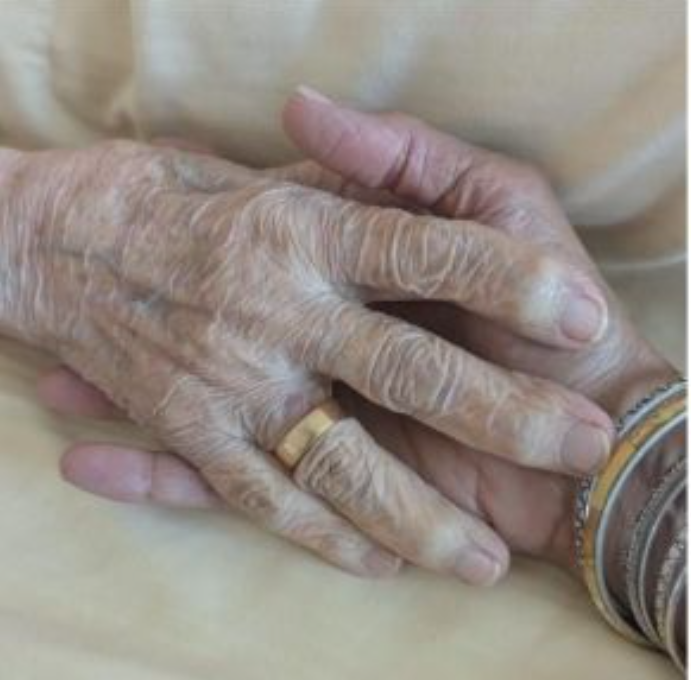
Just days after I arrived at my parents’ home in the south of Germany, my mother began her journey to the other side. It felt as if she had waited for me.
I have lived outside Germany for thirteen years now, returning once or twice a year. My mother was already deeply affected by dementia. And yet, somehow, she seemed to know that it was time. Her transition took almost four weeks, and I was there every day - holding her hand, sitting in silence, saying the things that had remained unsaid for many years.
We did not have an easy relationship. And yet, as her life narrowed, something remarkable happened. She seemed to be reduced to what I now believe is the most essential thing in life: love.
In her last days, the only words she could still form were simple and direct: “I love you so much. Do you love me too?” She said this to me, to her husband, to my siblings, to her grandchildren, and even to the staff who entered her room. It was as if everything else had fallen away - memory, identity, history - leaving only love behind. Witnessing this was profoundly moving, and deeply humbling.
After her death, practical matters took over. There was little space to grieve consciously. But something in me needed an outward gesture - a visible marker of an inner shift. And so, quite unexpectedly, I cut my hair very short, into a pixie cut.
This carries its own story. My mother always loved short hair. She disliked long hair, disliked grey hair - and she never tired of saying so. I resisted that all my life, holding on to my own sense of femininity. Only later, reflecting with my sisters, did we connect this to her own history: a war refugee during the Second World War, likely shaped in her early teens to suppress femininity as a matter of survival.
Cutting my hair now feels like a quiet act of reverence. I have decided to keep it this way for the full year of mourning. Living in India, this choice is very visible. Short hair on women is unusual here, and I receive curious looks and comments almost daily. And perhaps that, too, is part of the process - allowing grief to be seen, rather than hidden.
Letting go of my mother, and making sense of her life and mine, is still unfolding. In February, I will take time out deliberately - to sit with what has surfaced, and to allow the next layer of understanding to emerge.
Grief, I am learning, is not only about loss. It is also about being stripped back to what truly matters.